Showing posts with label Introduction to Creative Play. Show all posts

Thursday, 15 December 2016

Final Presentation

In the last week of Intro to Creative Play, we finally finished all the physical projects and presented it to the class. 

Our idea of City project is human evolution as we had to demonstrate the difference between old and new. We believe that evolution would be a good approach to depict how society has moved on from ancient to modernism day.  

We incorporated the technique Projection mapping to emphasis the pattern and it worked very well, it added the vibrant and culturally to our city.  This was kind risk taking as well because there's possibilities that we might fail it. When we did the experiment of projection, the African pattern video we made was projecting on the city set. However, when we moved to the DPL, the illumination was unsuccessful because it was too big and most of the apertures were mapped on the black floor. However, it actually looked pretty good than the project on the tin foil city. It emphasized the pattern and colours, as well as showing the slow motions, it also enhanced the prominent cultural themes. 

Another risk taking thing is that we used tin foil to wrap up up the buildings. As we know that tin foil is very easy to break, I had to draw pattern very carefully to avoid of rapping it. 


In the production process, we worked as part of the team and knew what exactly things each member should do. Harry was our team leader, James was responsible for making the model and I worked on the African patterns. According to my research, the 
African patterns are often used as a form of coded information. Parallel, zigzag, cruciform, curved spiral lines and so on. These can denote social status or have magical or religious powers. 
In the other words, the patterns are the reflection of the human cultural, and the cultural is a very important element of development of human evaluation. 

I think our project worked quite successfully because we meet the requirement, we used techniques associated with risk taking in a creative setting and we respond to the city project very well. However, if we were going to do it again, we will make some green screen footages as the transition to the project, we thought we did not have much time to shoot, but we actually have plenty of time left. We could utilize that period of time to shoot the video and make a short animation based on our city set. We could have done more experiment to our project and make it better. 


Another improvement we could do is using a cake stand spinner to rotate the city set. It would give audiences a 360 degree of perspective view, and it adds fun to the city as well as enhance the interactions. 


People set up the city sets


Other group's works


Tuesday, 13 December 2016

Casebook

In week12, Our group has finished all the physical buildings. Now we are heading on the casebook and presentation. 


Thursday, 8 December 2016

Final Production and experimentation

In week 11, Our team has came to the final step of our building set, which decorated the ground with sand and projecting it under the patterned lighting. 


James and me bought a bag of sands and several bottle of spray adhesive to decorate the base. We attempted to make the ground as realistic as possible but it seemed did not work well because of the glue was not strong enough to stick the sands. 


Another risky things we did is to spray the silver paint on the sand in order to make it look shinny. Obviously it did not work out because of the health and safety. Fortunately, we used glitter to replace the silver spray. It remains shinny and metallic.


Then, James had made a base for the set because the cardboard was too thin to break off, therefore we need extra support to hold the sets. And it looked amazing after wrapped up with foil papers. 


Experiment 


We also incorporated the technique, Project mapping to projecting the Rotoscoped pattern on the sets. 

Harry designed an animated circular pattern video with Illustrator and Affect Effect, and then projecting it on the set. 


It works pretty well as the tin foil bouncing back the light and it creates a feeling of mystery and culturally diverse. 


 In Africa, some patterns are often used as a form of coded information. Parallel, zigzag, cruciform, curved spiral lines and so on. These can denote social status or have magical or religious powers. 

This powerful and expressive elements are the best reflection of  history and cultural. We decided to use the pattern as the main element across through the entire set, from cave scooped to tin foil drawing. 


Monday, 5 December 2016

Process of City Project

We did some extra work on Monday. James had made few more tepees.


Research 

I carried on the patterns. This time, my patterns featured on the Chinese geometric patterns that people frequently saw it on the traditional Chinese buildings.


In any well-established culture, we can find intriguing patterns that have a strong mathematical background. In China, the well-known Chinese lattices are often works of high artistic value and in many of them, we can find principles of Euclidean and transformation geometry. (Referenced from http://atcm.mathandtech.org/EP2009/papers_invited/2812009_17224.pdf) 

I actually found a great source that explored selected examples of Chinese lattices. They showed how to assign a plane symmetry group signature to a lattice and demonstrated how Chinese lattices can be modelled using Geometer's sketchpad. 


Today, I've explored a new pattern from west culture and incorporated it into the project. I've been explored the new knowledge and assimilated the things I've seen from online. 


Saturday, 3 December 2016


In week 10's Intro to Creative Play, we made some mood board and started experimented with the project. 


we had produced some mood board for idea visualisation. There are lots of colourful patterns, geometry texture and diagram of human evolution on the mood board.  This is the intention plan we were about to produce. 


Harry draw two diagrams to explain the physical object we were going to do. First one is to make several clay characters with scoop pattern on it. Harry aimed to show the process of human evolution by putting each character in different times. The second diagram showed how to make the  patterned metal buildings. In order to show the development of technology and society, we need to make the building metallic and shiny. Thus, I brought a foil roll to wrap up the foam. Of course, we have to draw the pattern on it as it's the most important element in our plan. 


The pattern I drew are not simply made up, they actually combined in lots of meanings and significance. 


The idea of my pattern inspired by ancient Egyptian symbols and Maya civilisations symbols. People all around the world know many Egyptian symbols when they see them. Those symbols are magical and significance, most of them were depicted in hieroglyphs, these symbols were often called ''The words of God'' and these symbols were often used by priests. 

An example of Egyptian Symbol: Ankh
symbol of eternal life. The gods are often see holding an ankh to someone's lips this is considered to be an offering of ''. The Breath of Life'' the breath you will need in the afterlife. 


Here are some photos of the final result of metal pattern buildings. They look a bit abstract because of the shape are not straight. However, I think it adds more meaning and abstraction to the project, it seems we live in an illusory world that combined the elements of ancient culture and modern technology together. 


Saturday, 26 November 2016

Week 9 Idea generation of City Project

In week 9's Intro to Creative Play, we started to produce the mind map for City Project, we generated various of start points, idealisation and factual information  and think of the divergent possibility to produce the city physically. 


Mind Map

 This is the mind map we had created today. We thought about requirements in the brief such as old & new, techniques and meaning of the city. We produced several ideas like animal society e.g. hives, the structure of ant house. The insect colony are powerful and unity. It has the most ecological successful structure on the planet. 

We decided to set the theme Evolution to our city project. The product will feature on the evolution of the city, from ancient to modern days. There will be three stages set on the circular platform that includes: ancient ocean, stone ages and the building in the modern days.  We are going to create these in order to meet the brief requirements, history, old meet new and physically... 


Image result for chaos theoryWhen we talked about applying the pattern or referenced to hives, we also linked to several theories, for example,  Chaos theory - Branch of mathematics that deals with systems that appear to be orderly. 


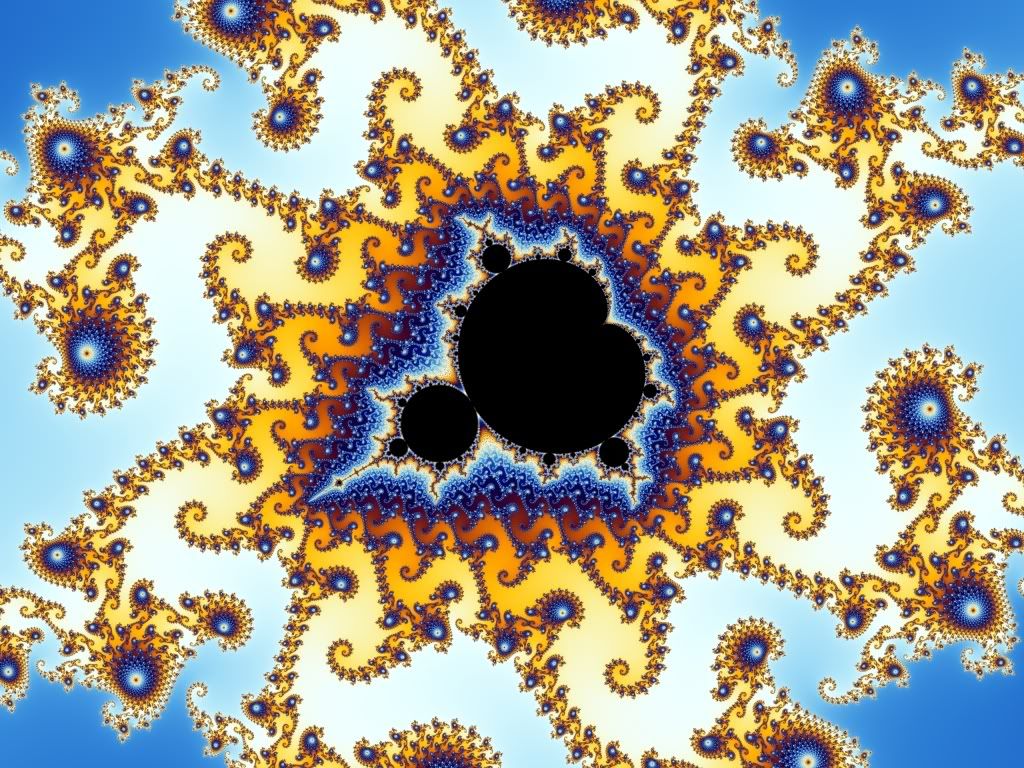
Image result for mandelbrotMandelbrot set, a particular set of complex numbers which has a highly convoluted fractal boundary when plotted. 


Synesthesia, the production of a sense impression relating to one sense or part of the body by simulation of another sense or part of the body. 

We attempted to incorporate those theories into the brief, start thinks shapes of the city, how it sounds like and how it feels like etc. 

Here is the mind map of visual ideas that present what we will be produced on the circular platform. Basically, there are three stages which are modern day, stone age and ancient natural. These three stages expressed how did we evolve from small-brained ape into the human being and how did our society has developed. We are going to create towers or landmarks for the modern day and it would be better if we use foil rolls to construct the  metal materials and implication of technology evolution.  
for the stage two. we intend to create few caves with patterns on to show the communication in the stone age. 


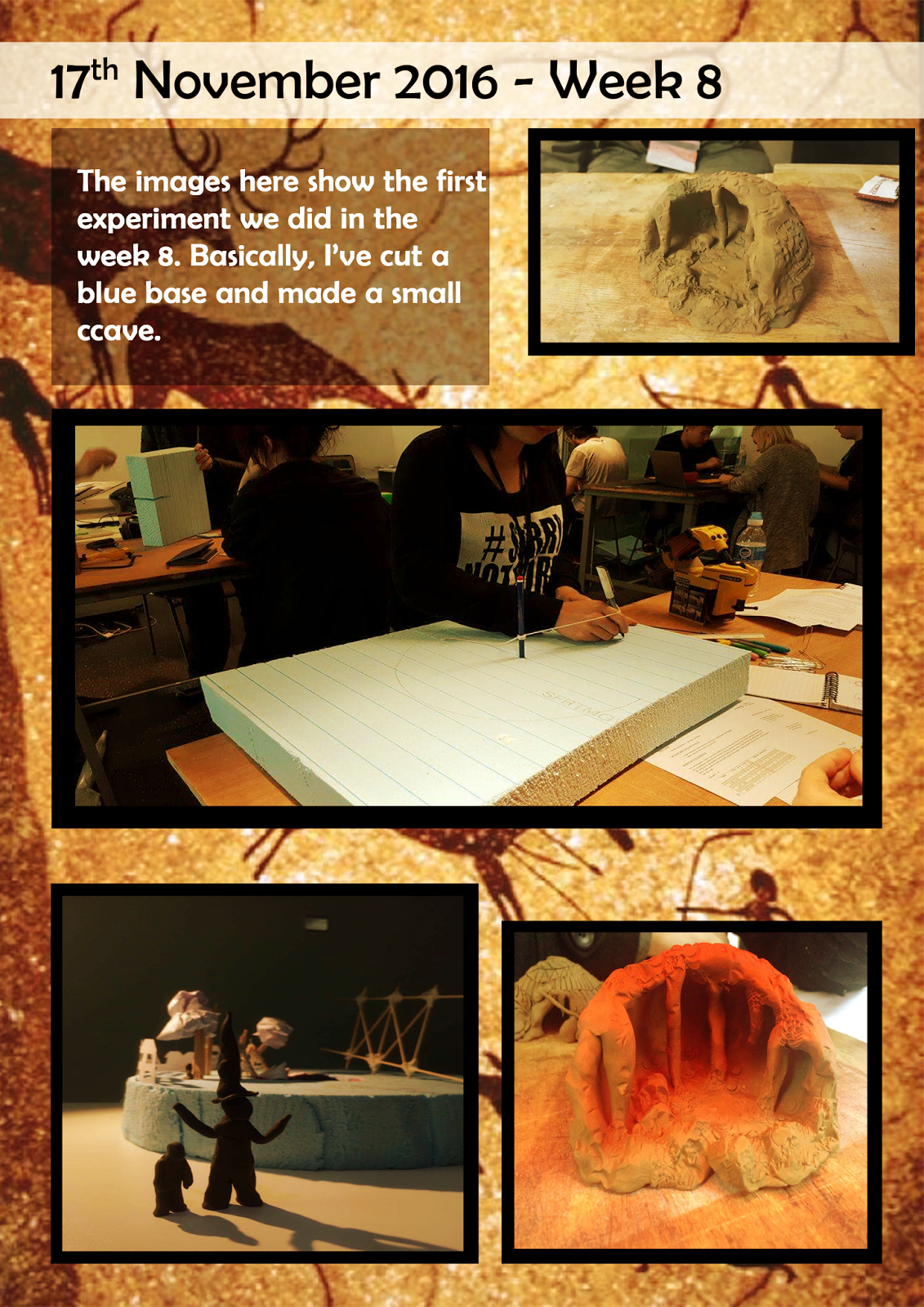
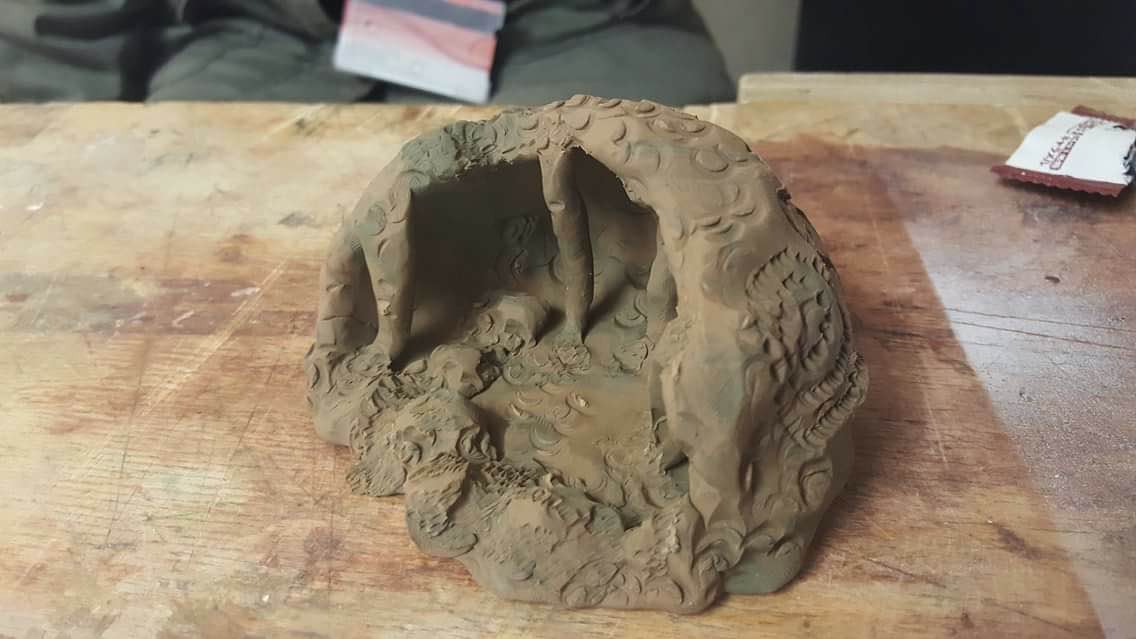
Here are some clay caves that we've made in the experiments. Harry carved some African pattern on his cave because the first human being came from African and he intends to merge some African art culture into the human evolution. 

We used phone lighting to simulate the projection mapping. One of our plans was to utilise the projector to create the atmosphere of the stone age.